
Why I Built PuchiDen
Skype is gone. International calling on the open web should have got better since then, but it got worse instead. PuchiDen is my answer: a public phone for the internet, no app, no account, no tracking.
 Author
Iqbal Abdullah
I have to admit something up front: I have spent most of my career building telephony products, and even I found international calling annoying after Skype was retired.
Microsoft shut Skype down in May 2025. For a lot of people, that was the end of a habit they had had for twenty years. Open the app, click a contact, talk to your mum in another country. It was not perfect software, but it worked.
What replaced it, for most people, was not a like-for-like service. It was an instruction to install Teams. Or WhatsApp. Or LINE. Or whatever the person on the other end happens to use. And if you only need to make one phone call, to one number, the friction of "first, both of you sign up for the same app" is absurd.
So I built PuchiDen.

What Bothered Me About the Alternatives
There are alternatives to Skype. I have tried most of them. Each of them, by themselves, is fine. Stacked together, they describe a category that has quietly drifted away from what regular people actually want.
-
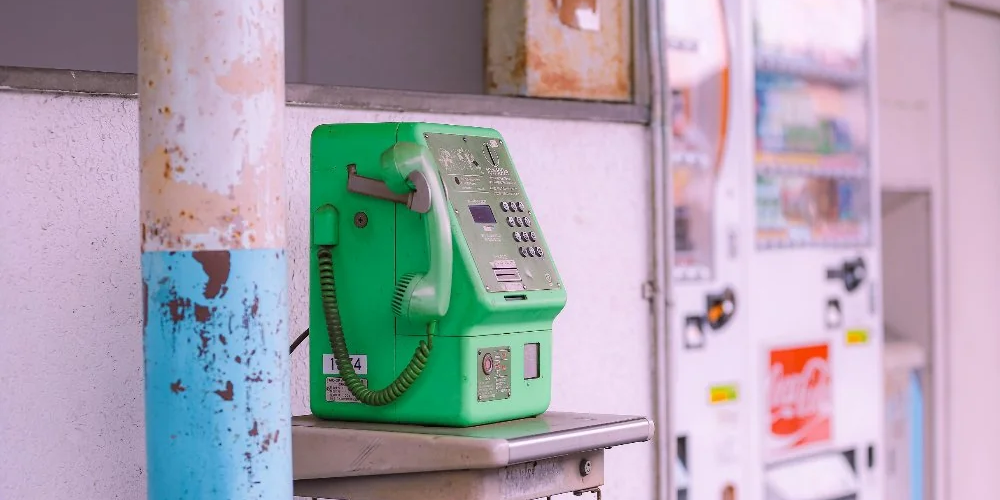
They want you to install an app. Even for a one-off call. Even for a number you will dial once and never again. Installing an app to make a phone call is, when you stop and think about it, ridiculous. A public phone is not a piece of software you install. It is a thing that exists, that you walk up to, that works.
-
They want you to make an account. Email address, password, sometimes a phone number to verify. For a phone call. Then they want you to verify again from a different device, because they have decided that your IP address looks suspicious from somewhere new.
-
They want you to log in with Google or Facebook. Which means the act of making a call is now linked to your social profile, your ad graph, and whatever else those companies have decided to attach to your identity this quarter.
-
They track you. Google Analytics on the landing page. Meta Pixel in the dialer. Session replay scripts watching where your mouse moved while you were waiting for your call to connect. None of this is necessary to make a phone call. All of it is now standard.
A public payphone in 1995 did not require any of this. You picked up the receiver, dropped in coins, dialled the number. The phone did not know who you were and did not need to.
I wanted that, on the internet, in 2026.
The Name
"Puchi" (プチ) is Japanese borrowed from the French petite — small, little, casual. It is the word you use for things that are minor and pleasant. A puchi-pati is a small party. A puchi-zeitaku is a small luxury.
"Den" (電) is the first character of 電話 (denwa), Japanese for telephone. On its own it just means electric, but in this context everyone reads it as phone.
PuchiDen is a small phone. A simple phone. The kind of phone you can use in three clicks without thinking about it.
That is the product, contained in the name.
What I Built
PuchiDen is a website. You go to it. You dial. You talk. That is the whole thing.
There is no app to install. There is no account to make. There is no password to remember and no Google account to link. There is no Google Analytics, no Meta Pixel, no third-party ad tracker watching what you do.
The user interface is meant to feel like a public phone. A keypad, a dial button, a hang-up button. If you have ever used a phone before, you already know how to use PuchiDen. That is on purpose.
It is also customisable, in the sense that you can create a phone directory of your own, and use your own caller id to call.
Why I Could Build This and Most People Could Not
I will be straight with you: most of the reason PuchiDen exists in this shape is that I have spent the last twenty years inside the boring parts of telephony.
I started Xoxzo in 2007 doing SMS-to-email. Then SIP. Then WebRTC. We bridged the internet to the public phone network for fourteen years before the company was acquired in 2021. The unsexy infrastructure problems — codecs, NAT traversal, carrier routing, jitter buffers, call quality on a flaky mobile connection in a Tokyo basement — those are problems I have already solved several times.
That is the part that makes a "small simple phone" hard. Not the user interface. Not the marketing site. The phone call has to actually connect, and it has to sound good, and it has to do that without you knowing or caring how it works.
If you do not have that background, building this is a multi-year exercise. If you do, it is a question of taste and discipline: knowing what to leave out.
What I Left Out On Purpose
There is no chat. There is no video. There is no "stories" feature. There is no friends list (you do have a phone directory though), no social graph, no engagement metrics shown to the user. There is no AI assistant offering to summarise your call. There are no notifications because there is nothing to notify you about.
PuchiDen makes phone calls. That is what it does.
I am aware that the entire prevailing direction of consumer software is to add things, not remove them. Every app eventually grows a feed, a chat, and a marketplace. I have decided that PuchiDen will not. The point is to give people something that is finished — not perfect, but finished — and that does not get worse over time as features are bolted on for product-roadmap reasons.
Who This Is For
PuchiDen is for anyone who needs to make an occasional international call without it becoming a project. A few specific cases I had in mind:
- Travellers who need to call a hotel, a clinic, embassies in other countries or a local number while they are abroad.
- People calling family overseas where the family member is on a regular landline or mobile, not on any particular app.
- Small businesses or nomad workers that need to call their clients or their banks that are in different countries
- Anyone who used to use Skype for this exact thing, who now has nowhere obvious to go.
If you fall into any of these, give it a try at puchiden.app. It will take you about thirty seconds to find out whether it works for what you need, and basically just around 3 clicks to make a call.
What Comes Next
This is the first blog post on this site. It will not be the last. I plan to write about how PuchiDen actually works under the hood, why running call infrastructure in 2026 is harder than it looks, the privacy choices we made and why, and the decisions I am still wrestling with. If those are the kinds of things you want to read, the author page is the place to follow along.
Thank you for reading. And thank you for trying PuchiDen. It is a small thing, on purpose.