Feeling Like You Belong Nowhere? You Are Not Alone. On Identity and the Overseas Japanese
Overseas Japanese often carry an identity they cannot name. This article gives that feeling a name through the TCK concept, shares a Japanese mother's story in Malaysia, and argues that the uncertainty is a strength.
 Author
Iqbal Abdullah
Author
Iqbal Abdullah
We at PuchiDen serve a lot of Japanese customers living overseas. They call banks, government offices, insurance companies — the ordinary errands of Japanese life that do not stop just because you are not in Japan. And among the people who use PuchiDen for these calls, we have noticed something: many of them are living with an identity they cannot quite name.
They are Japanese. But they are not "Japanese enough" for Japan. They are at home abroad. But they are never fully at home there either. They live in the gap, and the gap has no name.
This article gives it a name. And then we tell you why the gap is not a flaw.
What Is a TCK, and Why the Name Matters
TCK stands for Third Culture Kid. The term was developed by American sociologist Ruth Van Reken and others.
In plain language, it means someone who spent their childhood in a culture different from their parents'. Not the parents' culture. Not the culture they grew up in. A third one, built from pieces of both, that belongs to them alone.
Researchers define it like this: connected to every culture, but fully owned by none.
If that sentence made your chest tighten, you might be a TCK.
The Pain of Being Told You Are Not Japanese Enough
There is a story TCK people hear over and over.
Abroad, you are obviously Japanese. Black hair, yellow skin, Japanese language. The label follows you everywhere.
Then you return to Japan, and the label falls off.
"You are not really Japanese, are you?"
You do not know the "common sense." You miss the radio exercise references. You cannot picture the school commute culture. Your sense of timing is off.
Small disconnects pile up until they look like a wall.
One woman told us that when she lived in Europe, she looked in the mirror and saw a flat Asian face. When she returned to Japan and stood among Japanese people, she looked in the same mirror and saw a foreigner. The face had not changed. The context had.
Same face, same body, same person. Different reflection every time. That is the TCK daily routine.
The Language Struggle
For TCK people, language sits at the centre of identity.
"Japanese is my mother tongue, but I cannot use it as well as people my age in Japan." "My English is not as good as native speakers either." "What was the Japanese word for this again?"
Two languages swirl together in your head. Are you bilingual, or are you just a semilingual who failed at both?
The question does not go away in your twenties. It does not go away in your thirties.
But language researchers say something useful. It is not whether you speak perfectly. It is whether you show up with the intention to connect. Perfect grammar matters less than the willingness to be understood. That is the real TCK language skill.
Keiko's Story: A Mother in Malaysia
The draft of this article was reviewed by one of our customers. She is a Japanese mother living in northern Malaysia, raising a son. We will call her Keiko.
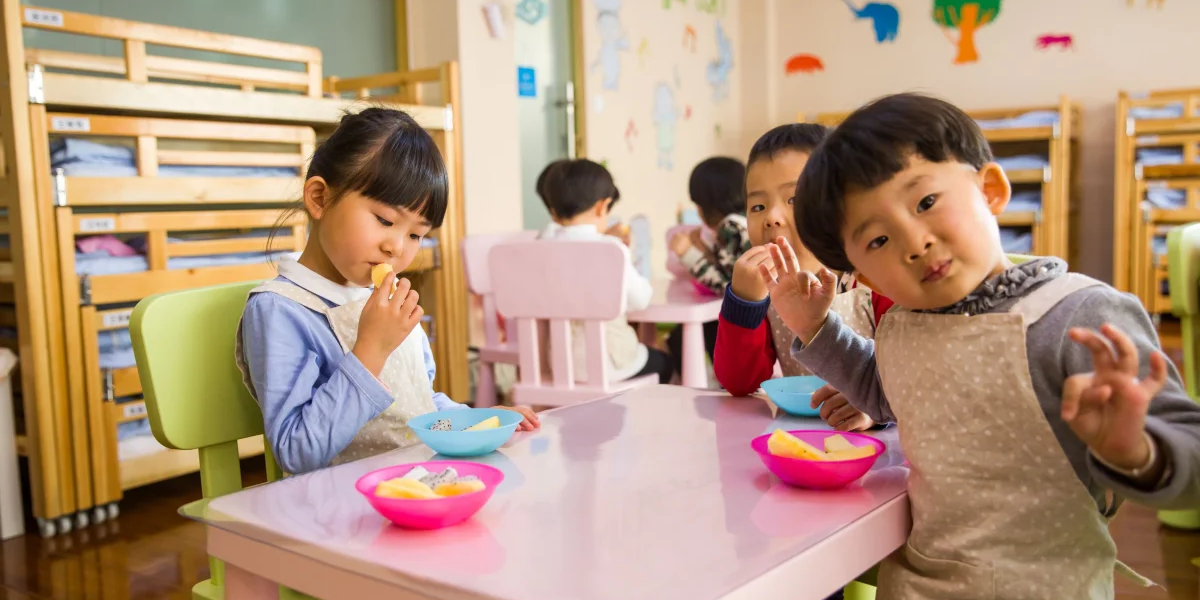
Her son is two years and one month old. And Keiko is watching him become a TCK in real time.
Here is what she told us, in her own words:
"'ABCDEFG...' is perfect! But he does not know 'あいうえお' yet. I only just realised this recently."
Keiko's son is a slow talker. At this age, children typically start putting two words together — "want bread," that kind of thing. Her son has not reached that stage yet.
Their family doctor told her this: because he is exposed to English, Malay, and Japanese all at once, the multilingual environment might be contributing to the language delay. If he is not putting two words together by age three, he will be diagnosed with "language delay." For now, they wait and see.
That part is common enough. But Keiko's real discovery came in the next sentence:
"Even though my son is Japanese, I suddenly realised I am worried about whether he will be able to read, write, and speak Japanese properly in the future. Until now, I only wanted him to become fluent in English. But now I think, if we keep living like this, his Japanese will not improve. Not unless we teach him."
And then:
"Send him to a Japanese school in Malaysia?? If so, wouldn't it be better to just be in Japan? I am really struggling with his future path."
The irony is sharp. She wanted him to learn English. Now she is afraid he will lose Japanese. This is the exact reversal every overseas parent faces.
Language is not a zero-sum game. Learning one does not erase another. But without deliberate effort, the Japanese inside your own home does thin out. Hiragana, katakana, kanji. Reading, writing, speaking. Lose any one of them, and the gap between "a Japanese child" and your child starts to open.
Keiko's son is two years and one month old. He is not even a TCK yet. He is standing at the entrance, and his mother is already wondering what the ticket costs.
Reverse Culture Shock
When TCK people return to Japan, many go through reverse culture shock.
"When I went back, Japan looked like a different country."
You see this phrase on forums and blogs again and again.
Japanese "common sense" does not look like common sense anymore. You feel uneasy watching old customs continue without question. You get labelled as "opinionated" for saying what you think. You get told you "talk too much" when you are just being direct.
These are not criticisms. They are just observations made through a different lens.
One man joined a Japanese company and was hit by morning radio exercises. "I was amazed by Japanese discipline. But I also felt uneasy about how old practices continue without anyone questioning them."
That uneasiness is a normal TCK response. It is not rebellion. It is a different calibration.
I Am Me. My Hometown Is the World.
It took her nearly twenty years, but one woman found her answer.
"I am me. My hometown is the world."
Her conclusion was this: people are not simple enough to be defined by passport alone. What makes you who you are is the accumulation of experiences across your life.
"A typical Japanese person" is a fantasy. There is already regional diversity inside Japan. Forcing yourself into a single "normal" is a waste of time.
If you think of hometown as any place you spent meaningful time and grew attached to, then having many hometowns is richness, not lack. Wherever you go, a friend's home country feels familiar. The whole world feels close.
She called this feeling "my hometown is the world."
The Strengths of Growing Up Between Cultures
TCK life has two sides. Here they are.
| The Struggle | The Strength |
|---|---|
| Wondering where you belong | Flexibility |
| Being unable to choose just one side | Natural multicultural understanding |
| Feeling labelled and out of place by others | Easy adaptation to new environments |
| Having no roots, no single "home" | Ability to connect with people from any culture |
| Difficulty with long-term commitment | Tendency to generate innovative ideas |
| Appearing cold during goodbyes | High empathy and cross-cultural competence |
TCK people become cultural chameleons without trying. They automatically adjust behaviour and speech to fit the group around them. This is not a social trick they learned. It is a survival skill.
For Parents Raising TCK Children
When we talk about TCK identity, parents often ask the same thing.
"Is my child becoming a TCK?"
Keiko is one of them. Parent and child experience the same overseas life, but they do not experience it the same way. Siblings often share things parents never see.
As Keiko's words show, parents swing between "I want him to learn English" and "I do not want him to lose Japanese." Hearing that a multilingual environment might delay your two-year-old's speech is worrying. Should you send him to a Japanese school? Should you just move back to Japan?
There is no correct answer.
What matters, maybe, is that the parent does not get overwhelmed. Whether a child accepts multicultural identity naturally depends a lot on how the parent reacts. Looking for what is "missing" makes the child feel insufficient. Seeing a complex identity as something positive is the best gift you can give.
And here is one more thing. "Protecting Japanese" for the parent is also about protecting your connection to Japan. Practicing hiragana once a week. Reading Japanese picture books. Letting them talk to grandparents on the phone.
Small connections, repeated, are what keep a child's Japanese alive.
You Are Allowed to Be Yourself
If you are a Japanese person living overseas, your daily life still involves phone calls to Japan. Banks, government offices, insurance companies. And perhaps most importantly, phone calls with family back home who do not use the same apps you do.
These are the threads that keep you connected to Japan. We built PuchiDen to make those calls a little easier.
But what we really want to say is simpler than that.
Wherever you are, you are allowed to be yourself. You are not the only one who feels like they belong nowhere. That uncertainty is not a flaw. It is your strength.
References